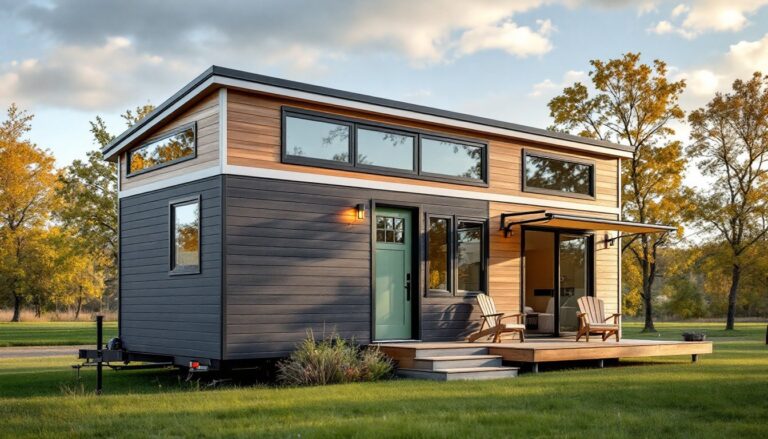
Financing a tiny home isn’t as straightforward as buying a traditional house. Most lenders won’t touch a mortgage for anything under 400 square feet, and conventional loan products assume you’re bolting a structure to a permanent foundation. That leaves tiny home buyers navigating personal loans, RV financing, or specialized lenders, each with different terms, rates, and qualification hoops. A loan calculator built for tiny homes cuts through the confusion by modeling payments across these non-standard financing options, so buyers can compare real monthly obligations before signing paperwork.
Table of Contents
ToggleKey Takeaways
- A tiny home loan calculator helps you compare financing options—RV loans, personal loans, and specialty products—to find the monthly payment and total interest cost that fits your budget.
- Interest rates for tiny homes vary widely based on loan type and credit score, ranging from 5%–18%, so shopping multiple lenders and using a calculator to model both best-case and realistic scenarios is essential.
- Loan term is your biggest lever: extending a $50,000 loan from 5 to 10 years cuts monthly payments nearly in half but doubles total interest paid, so choose based on your cash flow and ownership timeline.
- Down payment requirements typically range from 10%–25%, and increasing your down payment by just 5% can unlock significantly better interest rates and lower monthly obligations over the loan’s life.
- Beyond the loan payment, budget for insurance ($50–$100/month), utilities ($50–$200/month), land costs ($300–$800/month rent), and maintenance reserves (1%–2% of home value annually) to ensure true affordability.
- Before finalizing any tiny home loan, compare offers from at least three lenders, improve your credit score if possible, and model total ownership costs in a spreadsheet to confirm the monthly burden fits your income and lifestyle.
Understanding Tiny Home Financing Options
Tiny homes fall into a gray zone for lenders. If the structure sits on a trailer and qualifies as an RV under RVIA standards (typically under 400 square feet with wheels attached), buyers can pursue RV loans or chattel loans. These carry 7–15 year terms at interest rates between 5%–10%, depending on credit score and down payment. The benefit: faster approval and no foundation requirement. The downside: shorter amortization means higher monthly payments compared to a 30-year mortgage.
For tiny homes built on permanent foundations and meeting local building codes, some credit unions and community banks offer small-balance mortgages. These resemble traditional home loans but often require 10%–20% down and a minimum loan amount around $50,000. If the tiny home doesn’t meet that floor, lenders won’t underwrite it as real property.
Personal loans are the fallback. Unsecured personal loans cap out around $100,000 with 3–7 year terms and rates climbing to 12%–18% for average credit. They’re fast and don’t require collateral, but the cost compounds quickly. Secured personal loans, using another asset as collateral, can push rates down a few percentage points, though down payment strategies still apply if you’re leveraging home equity or savings.
Specialized tiny home lenders like LightStream and Bluestone have emerged in recent years, offering loan amounts from $10,000–$100,000 with competitive rates for borrowers who can document income and maintain credit scores above 680. These products split the difference: they acknowledge tiny homes as a unique asset class without forcing buyers into RV or personal loan boxes.
How a Tiny Home Loan Calculator Works
A tiny home loan calculator runs the same amortization math as any other loan estimator, principal, interest rate, and term length, but it accommodates the shorter loan durations and variable rate ranges that define tiny home financing. Input your total loan amount, interest rate, and loan term in months, and the calculator spits out a monthly payment figure using standard amortization formulas.
The real value comes from running multiple scenarios. Punch in a 5-year personal loan at 12% alongside a 10-year RV loan at 7.5% to see how term length and rate interact. A $50,000 loan at 12% over five years costs $1,112 per month, while the same amount at 7.5% over ten years drops to $596. That spread matters when you’re also budgeting for land rent, utilities, and the inevitable repairs that come with any dwelling.
Most calculators display total interest paid over the loan’s life. A shorter term at a higher rate might still cost less in total interest than a longer term at a lower rate, but the monthly cash flow difference can make or break a budget. Run both numbers before deciding whether to stretch payments or pay down the loan faster.
Key Variables That Impact Your Monthly Payment
Loan amount is obvious: borrow more, pay more. But tiny home buyers often underestimate total project cost. A $40,000 shell needs another $10,000–$20,000 in finish work, appliances, and hookups. Factor that into the loan request upfront, or plan to cover overages out of pocket.
Interest rate hinges on credit score, loan type, and lender. A jump from 7% to 9% adds $50–$70 per month on a $50,000 loan over ten years. Shop multiple lenders and check whether rates are fixed or variable. Variable rates can start low but climb if benchmarks like SOFR or prime rates increase.
Loan term is the biggest lever. Extending a $50,000 loan from five years to ten years cuts the monthly payment nearly in half, but doubles the interest paid. If cash flow is tight now but you expect income growth, longer terms buy breathing room. If you want to own the home outright faster, shorter terms make sense, assuming you can handle the higher payment without skipping maintenance or insurance.
Loan Amount and Down Payment Requirements
Tiny home lenders typically require 10%–20% down for RV and chattel loans, and 15%–25% for higher-risk or unsecured personal loans. Put less down, and the lender compensates with a higher interest rate or shorter term. A $60,000 tiny home with 20% down ($12,000) leaves a $48,000 loan balance. At 8% over ten years, that’s $583 per month. Drop the down payment to 10% ($6,000) and the loan climbs to $54,000, pushing the monthly payment to $656, an extra $73 every month for the life of the loan.
Down payments also affect loan-to-value (LTV) ratios, which lenders use to gauge risk. An LTV above 90% often triggers higher rates or requires mortgage insurance (rare in tiny home loans, but some lenders fold the risk premium into the rate itself). For buyers with limited savings, increasing the down payment by even 5% can unlock better terms.
Some tiny home builders offer in-house financing with lower down payment thresholds, sometimes as little as 5%–10%. These loans are convenient but often carry higher rates than external lenders. Run the numbers in a calculator to compare the builder’s offer against a credit union or online lender. The convenience of one-stop shopping might not justify an extra percentage point in interest over a decade.
If liquid cash is tight, consider alternative down payment sources: tapping a Roth IRA (up to $10,000 for a first-time home purchase), borrowing against a 401(k) (with repayment terms), or liquidating non-retirement investments. Each has tax implications, so consult a financial advisor before moving money.
Comparing Interest Rates for Tiny Homes
Interest rates for tiny homes span a wide range because lenders assess risk differently. RV loans from credit unions often land between 5%–8% for borrowers with credit scores above 700. Chattel loans (secured by the home as personal property) run 6%–10%, depending on whether the home is new or used and whether it’s certified by RVIA or NOAH (National Organization of Alternative Housing).
Personal loans, secured or unsecured, climb higher. Unsecured rates start around 8% for excellent credit and reach 18%+ for fair credit. Secured personal loans using another asset as collateral can drop rates closer to 6%–10%, but the lender will appraise the collateral and may only loan a percentage of its value.
Specialty lenders marketing directly to tiny home buyers often advertise rates starting at 6.99%, but those promotional tiers require excellent credit, 20%+ down, and proof of income. Borrowers with credit scores in the 650–700 range should expect rates closer to 9%–12%. Use a loan calculator to model both the best-case and realistic-case rates you’ll qualify for based on your financial profile.
Fixed vs. variable rates matter over time. Fixed-rate loans lock in the rate for the entire term, protecting against rate hikes. Variable-rate loans adjust periodically based on an index (usually SOFR or prime rate plus a margin). If you’re financing over ten years and expect interest rates to rise, or if you value payment certainty, fixed is safer. If you plan to pay off the loan early or refinance within a few years, a lower initial variable rate might save money, but track the rate caps and adjustment frequency in the loan agreement.
Many home service cost guides focus on renovation budgets, but the same comparison discipline applies to loan shopping. Request APR (annual percentage rate) from every lender, not just the nominal interest rate. APR includes fees, origination charges, and other costs, giving a truer picture of what you’ll pay.
Using the Calculator to Budget for Additional Costs
The monthly loan payment is only one line item. Tiny home ownership stacks on insurance, utilities, land rent or purchase, permits, and maintenance. A loan calculator helps model the financing piece, but punch those other costs into a spreadsheet alongside the estimated payment to see the full monthly burden.
Insurance for a tiny home on wheels often falls under RV policies, costing $600–$1,200 per year ($50–$100/month) depending on coverage limits and location. Tiny homes on foundations may qualify for standard homeowners insurance, though some insurers balk at non-traditional structures. Expect to shop around or use a specialty insurer, which can add 10%–20% to premiums.
Utilities vary wildly. Grid-tied homes with electric heat, AC, and water might run $100–$200 per month. Off-grid setups with solar panels, propane, and composting toilets can drop utilities to under $50, but the upfront cost of solar panels and battery storage can exceed $10,000–$20,000. If financing covers those systems, the loan amount, and monthly payment, climb accordingly.
Land costs are often underestimated. Renting a pad in a tiny home community costs $300–$800 per month in most regions. Buying land outright requires a separate loan or cash, plus development costs: well or water hookup, septic or sewer connection, electric service, and gravel pad or foundation. Those improvements can run $15,000–$40,000 depending on site conditions and local codes. Some project planning tools offer rough estimates for site work, but get bids from local contractors before committing.
Maintenance and repairs don’t stop because the house is small. Budget 1%–2% of the home’s value per year for upkeep. A $60,000 tiny home needs $600–$1,200 annually set aside for roof sealant, appliance repairs, trailer bearing service (if mobile), and weatherproofing. That’s another $50–$100 per month in reserves.
Add it all up: a $583 loan payment plus $75 insurance, $150 utilities, $500 land rent, and $75 maintenance totals $1,383 per month. Run that total against your income to confirm affordability before signing loan documents.
Making the Numbers Work for Your Tiny Home Dream
Financing a tiny home means working within constraints that don’t exist in conventional housing: shorter terms, higher rates, and lenders who treat your dream home like a depreciating asset. A loan calculator turns those variables into concrete numbers, letting you test scenarios and find the financing path that fits your income, savings, and long-term plans.
Start by gathering quotes from at least three lenders: a local credit union, a specialty tiny home lender, and a personal loan provider. Plug each offer into the calculator and compare not just monthly payments, but total interest paid and loan flexibility (prepayment penalties, refinancing options, etc.). A slightly higher monthly payment on a shorter term might save thousands in interest and let you own the home outright years earlier.
If the numbers don’t work yet, look at the levers you control. Increase the down payment to lower the loan amount and unlock better rates. Improve your credit score before applying, paying down revolving debt and disputing errors can bump scores by 20–40 points in a few months, enough to shift rate tiers. Consider a less expensive tiny home model or a DIY build to reduce the loan amount.
Tiny home financing isn’t as plug-and-play as a conventional mortgage, but it’s more accessible than it was five years ago. Lenders are slowly recognizing tiny homes as a legitimate housing category, and contractor resources now include builders who specialize in code-compliant, financeable structures. Use the calculator as a planning tool, not just a payment estimator. Model best-case and worst-case scenarios, factor in the total cost of ownership, and make sure the monthly budget leaves room for the life you’re building around that tiny home, not just the loan payment on it.