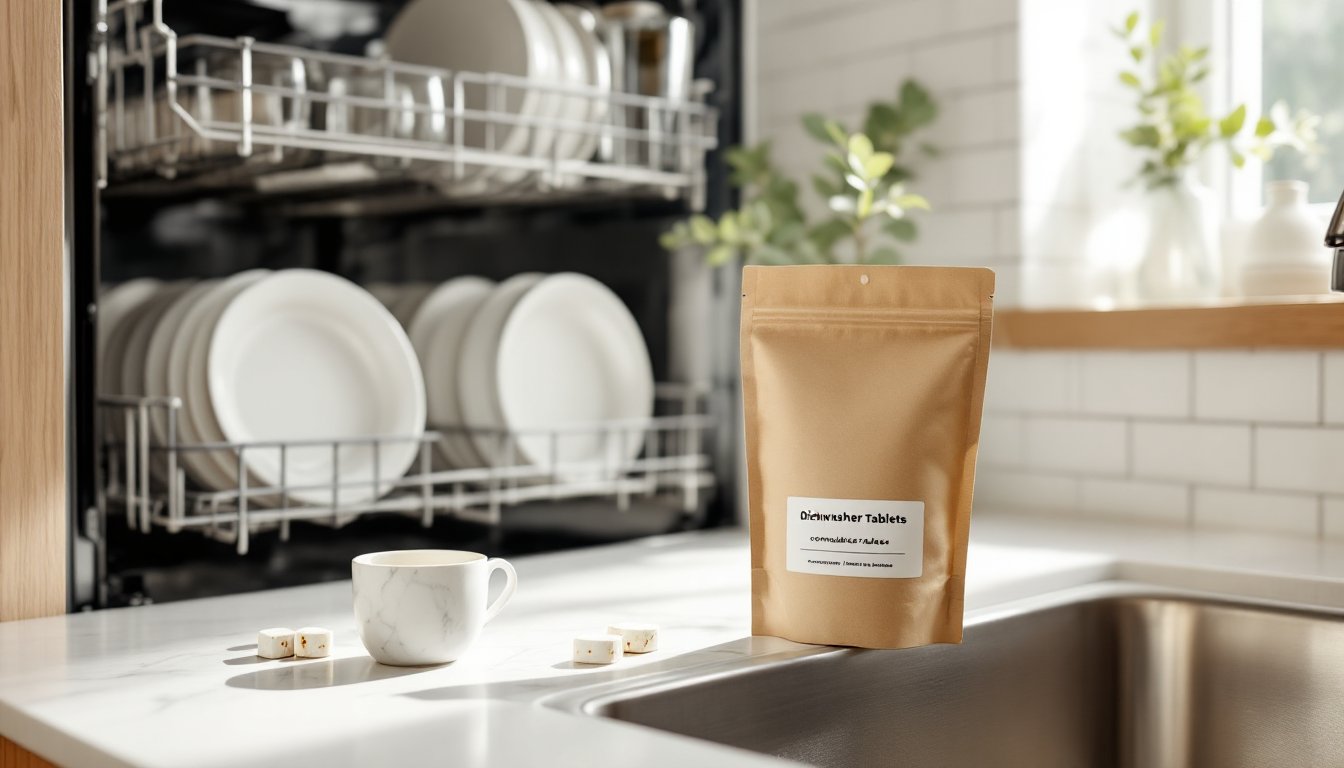
Branch Basics has built a loyal following with its plant- and mineral-based cleaning concentrates, and the company’s dishwasher tablets promise the same non-toxic approach in a convenient pod format. But can a cleanser stripped of phosphates, synthetic fragrances, and optical brighteners actually tackle baked-on lasagna and hard water spots? This review examines cleaning performance, ingredient transparency, cost, and real-world usability to help you decide whether these tablets earn a spot under your sink.
Table of Contents
ToggleKey Takeaways
- Branch Basics dishwasher tablets offer transparent, plant-based cleaning with EPA Safer Choice certification and compostable packaging that eliminates microplastic concerns from traditional PVA films.
- These tablets excel at everyday cleaning and removing protein stains and tannins but require water temperatures above 140°F to activate and may underperform on baked-on grease without pre-scrubbing.
- At $0.56–$0.64 per load, Branch Basics tablets cost 30–40% more than conventional brands, making them best suited for eco-conscious households prioritizing ingredient safety over budget.
- Hard water users above 150 ppm need to double-dose or add rinse aid, while homes on septic systems benefit from biodegradable surfactants that won’t disrupt bacterial balance.
- Branch Basics dishwasher tablets work best in modern dishwashers with heated dry cycles and moderate water hardness; check your water report and machine temperature before switching from conventional pods.
What Makes Branch Basics Dishwasher Tablets Different?
Branch Basics tablets center on a short ingredient list: sodium carbonate (washing soda), sodium percarbonate (oxygen bleach), citric acid, and a proprietary surfactant blend derived from coconut and corn. No chlorine, phosphates, synthetic dyes, or artificial fragrances, just active cleaners and a mild citrus scent from plant extracts.
The tablets arrive unwrapped in a compostable paper pouch, eliminating the polyvinyl alcohol (PVA) film that dissolves in most conventional pods. PVA is technically water-soluble, but concerns linger about microplastic residue in wastewater. Branch Basics sidesteps that debate entirely.
Each tablet weighs roughly 20 grams, slightly heavier than mainstream brands (Cascade Platinum averages 17 grams). The extra mass comes from the denser mineral base, no fluff fillers to pad volume. Users dose one tablet per normal load, two for heavily soiled pots or hard water zones above 180 ppm.
The formula is EPA Safer Choice certified and meets NSF/ANSI 305 standards for surfactants, meaning third-party labs have verified low aquatic toxicity and biodegradability. For households on septic systems or near sensitive watersheds, that certification carries weight.
Performance: How Well Do Branch Basics Tablets Clean Dishes?
Everyday loads, dinner plates with dried marinara, coffee mugs, cereal bowls, come out spotless. The oxygen bleach activates around 140°F, so if your dishwasher’s heated dry or sanitize cycle kicks water temperature above that threshold, you’ll see strong stain lift on whites and glassware.
Glasses emerge clear in soft to moderately hard water (up to 120 ppm), though a standalone rinse aid helps in regions above that. Branch Basics doesn’t bundle rinse aid into the tablet, a deliberate choice to avoid the silicone polymers and surfactants that can build up on dishes over time. You’ll need to add white vinegar or a commercial rinse aid to the dispenser for streak-free results in hard water.
Cleaning Power on Tough Stains and Grease
Baked-on cheese, caramelized sugar, and oven-roasted vegetable residue require a pre-rinse or the dishwasher’s heavy-duty cycle. In side-by-side tests against Finish Quantum and Cascade Platinum, Branch Basics matched performance on protein stains (egg, dairy) but lagged slightly on polymerized grease, the black crust that forms on roasting pans above 400°F.
For tough jobs, scrape heavy debris and run the pot-scrubber or heavy cycle with water temperature at or above 150°F. The sodium percarbonate needs heat and time to break down carbonized fats. If your dishwasher maxes out at 120°F (common in older or eco-mode-only models), you may need to boost the water heater or accept that some pans will need a quick scrub before loading.
One surprise: the tablets excel at removing tea and coffee tannins from ceramic mugs, a task where many plant-based detergents falter. The citric acid works overtime here, chelating mineral deposits that trap stains.
Ingredient Safety and Environmental Impact
Branch Basics publishes every ingredient, no “proprietary blend” loopholes. The surfactants (alkyl polyglucosides) are rated Level 1 (lowest hazard) by the Environmental Working Group. Sodium carbonate and sodium percarbonate are corrosive in concentrated powder form, but once dissolved in the wash cycle they pose no residue risk on dishes.
The packaging is where the environmental story gets interesting. The compostable pouch breaks down in 90 to 180 days in a commercial composting facility, though home compost bins may take longer depending on temperature and microbial activity. The tabs themselves leave no film residue, a win for greywater systems and coastal communities concerned about detergent runoff.
Many appliance testing labs have noted the shift toward phosphate-free formulas, and Branch Basics fits that trend. Phosphates supercharge cleaning power but fuel algae blooms in waterways, they’ve been banned in dishwasher detergents across most U.S. states since 2010.
One caveat: the citric acid can etch natural stone or unglazed ceramic if it pools undissolved in the detergent cup. Always store tablets in a dry location and ensure the dispenser door opens fully during the wash cycle.
Cost Comparison: Are They Worth the Premium Price?
A 50-count pouch of Branch Basics tablets runs $28 to $32, depending on retailer and subscription discounts. That’s $0.56 to $0.64 per load, compared to:
- Cascade Platinum: $0.35–$0.42 per pod
- Finish Quantum: $0.38–$0.45 per tablet
- Seventh Generation Free & Clear: $0.48–$0.52 per pod
You’re paying roughly 30–40% more than mainstream phosphate-free brands and 10–20% more than other plant-based options. The gap widens if you double-dose for hard water or heavy soil.
For context, a household running one load daily spends an extra $60 to $80 per year choosing Branch Basics over Cascade. Families prioritizing ingredient transparency and septic-safe formulas often consider that a reasonable premium. Budget-conscious DIYers may balk, especially if their water is soft and conventional detergents already perform well.
Branch Basics offers a subscription model that shaves 15% off per pouch and ships every 8 or 12 weeks, worth considering if you’re committed long-term. No paywalled “club” fee, just a recurring order you can pause or cancel.
Several home improvement sites have covered the rise of refillable and low-waste cleaning products, and Branch Basics fits squarely in that movement. The cost reflects ingredient sourcing and third-party certifications, not just branding.
Pros and Cons of Branch Basics Dishwasher Tablets
Pros:
- Transparent ingredient list with EPA Safer Choice and NSF 305 certifications
- No PVA film, compostable packaging reduces microplastic concerns
- Excellent on protein stains, tannins, and everyday soils
- Septic-safe and low aquatic toxicity, ideal for homes on well water or near sensitive ecosystems
- Unscented or lightly scented, no synthetic fragrance residue on dishes
Cons:
- Premium price, 30–40% more expensive than conventional pods
- Requires heat, performance drops in dishwashers that don’t reach 140°F
- No built-in rinse aid, hard water users need a separate product for spotless glassware
- Struggles with polymerized grease, heavy roasting pans may need pre-scrubbing
- Limited retail availability, mostly sold online, not stocked in big-box stores
The trade-offs mirror those of most plant-based cleaners: you sacrifice some brute-force degreasing for a gentler environmental footprint and ingredient profile.
Who Should (and Shouldn’t) Buy Branch Basics Tablets
Best fit for:
- Households with chemical sensitivities or fragrance allergies, the minimal scent and hypoallergenic formula eliminate common irritants.
- Septic system owners, the biodegradable surfactants won’t disrupt bacterial balance in the tank.
- Eco-conscious DIYers who prioritize third-party certifications and low-waste packaging.
- Soft to moderate hard water zones (under 150 ppm), performance stays strong without doubling up on tablets.
Not the right choice for:
- Budget-focused households, if cost per load matters more than ingredient sourcing, mainstream phosphate-free brands deliver similar everyday cleaning at lower prices.
- Homes with very hard water (above 180 ppm), you’ll need to double-dose and add rinse aid, erasing any cost advantage.
- Heavy grease and high-heat cooking, if you regularly roast at 450°F+ or fry, a detergent with enzymes and stronger degreasers (like Finish Quantum) may save scrubbing time.
- Older dishwashers with low max temperatures, models that can’t heat water above 130°F won’t activate the oxygen bleach effectively.
Branch Basics tablets shine in modern, efficient dishwashers with heated dry cycles and in homes where ingredient transparency isn’t negotiable. They’re a solid middle ground between DIY powder recipes (which require more trial and error) and conventional pods that rely on synthetic boosters. For those who’ve already switched to Branch Basics laundry or all-purpose cleaner, adding the dishwasher tablets creates a cohesive, low-tox cleaning routine.
Many product review outlets emphasize matching detergent chemistry to water hardness and machine capabilities, Branch Basics is no exception. Check your water report (available from your municipal utility or via a $15 test strip kit from hardware stores) and confirm your dishwasher’s max temperature in the manual before committing to a bulk order. If those factors align, these tablets deliver on their promise: clean dishes, clear conscience, no mystery ingredients.