Most dishwashers are built to last 10–12 years, but they’ll quit on you a lot sooner if you treat them like a self-maintaining appliance. A dishwasher that’s not maintained properly leaves residue on dishes, develops unpleasant odors, and eventually stops draining altogether. The good news? Keeping it in top shape takes less than 30 minutes a month. These seven maintenance tasks will prevent costly repairs, extend the life of the unit, and ensure your dishes come out spotless every time. No special tools required, just a little consistency and attention to the parts that matter most.
Table of Contents
ToggleKey Takeaways
- Clean your dishwasher filter every 1–2 weeks to prevent clogs, reduce pump strain, and maintain optimal dishwashing performance.
- Inspect and clear spray arm nozzles every 3–6 months to ensure even water distribution and spotless dishes across all surfaces.
- Monthly deep cleaning cycles with white vinegar or baking soda remove grease and mineral buildup that clouds glassware and causes odors.
- Maintain the door gasket monthly by wiping it clean and checking for cracks or leaks, since replacement costs only $15–$40.
- Keep your dishwasher drain clear by inspecting the drain hose for kinks and ensuring your garbage disposal is empty before each cycle.
- Use a rinse aid or citric acid cleaner every 2–3 months if you have hard water to prevent mineral deposits that reduce heating efficiency.
Clean the Filter Regularly for Optimal Performance
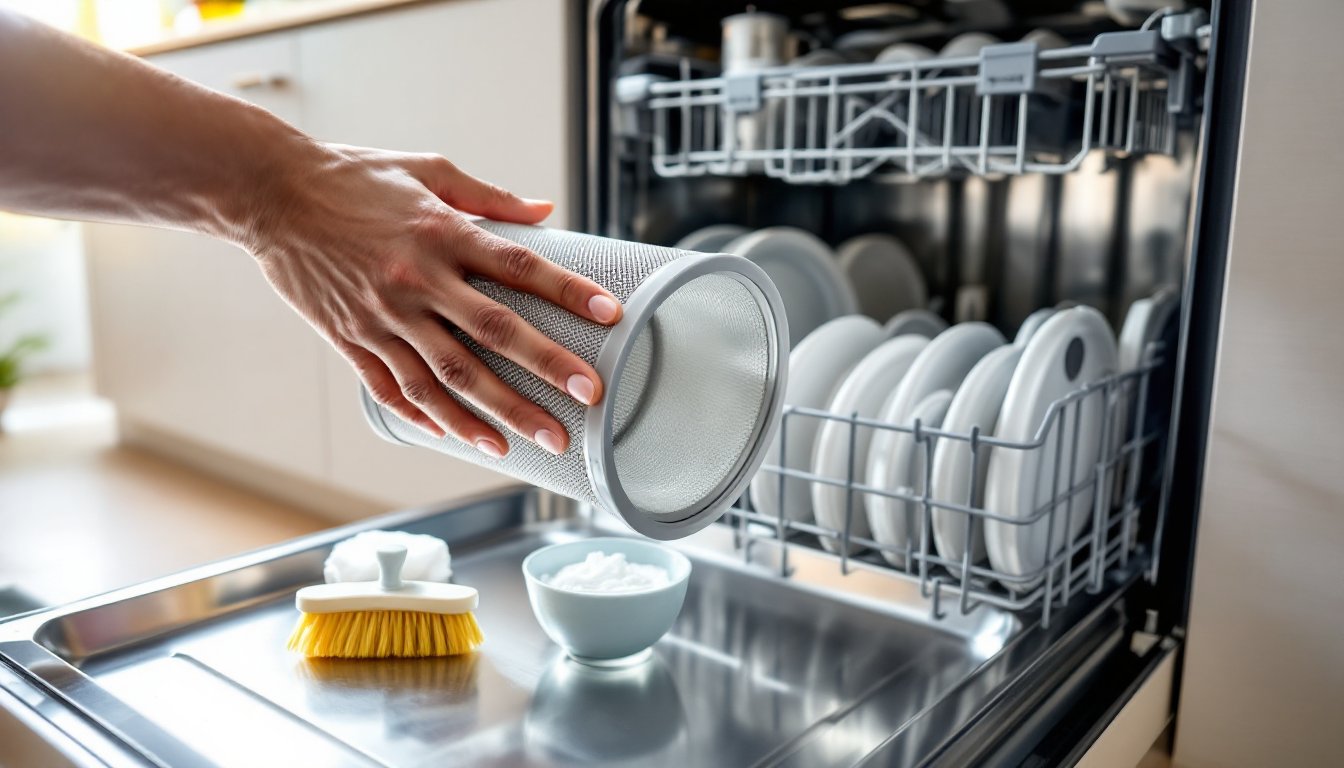
The filter is your dishwasher’s first line of defense against food debris clogging the pump and spray system. Most modern dishwashers use a removable cylindrical or flat mesh filter located at the bottom of the tub, under the lower spray arm. If you’ve never pulled it out, there’s a good chance it’s coated with grease, coffee grounds, and bits of food that slipped past the pre-rinse.
To clean it, twist or lift the filter assembly out according to your owner’s manual, most unlock with a quarter-turn counterclockwise. Rinse it under hot running water and use a soft-bristle brush (an old toothbrush works) to scrub away buildup in the mesh. For stubborn grease, soak the filter in warm water with a few drops of dish soap for 10–15 minutes, then scrub again.
Do this every 1–2 weeks if you run the dishwasher daily, or monthly for lighter use. A clogged filter forces the pump to work harder, reduces cleaning performance, and can lead to standing water at the bottom of the tub. If your dishwasher has a self-cleaning filter (common in older models), it may not require removal, but you should still check the sump area for debris buildup every few months.
Inspect and Clean the Spray Arms
The spray arms distribute water throughout the tub, and if their nozzles are clogged, you’ll end up with dirty dishes on one side and clean on the other. Hard water, mineral deposits, and small food particles can block the tiny spray holes over time.
Pull out the dish racks so you can access both the upper and lower spray arms. Most arms either lift off or are held in place by a screw cap at the center hub. Once removed, hold each arm under running water and look through the nozzles, if you see blockages, use a toothpick or a piece of thin wire to clear them. Don’t use anything metal that could scratch or enlarge the holes.
While you have the arms off, give the mounting hub a wipe-down. Debris can accumulate there and prevent the arm from spinning freely. Before reinstalling, spin each arm by hand to make sure it rotates without resistance. If it’s stiff or wobbly, check for cracks in the plastic or a worn bearing.
Perform this cleaning every 3–6 months, or sooner if you notice inconsistent wash results. In areas with hard water, you may need to do it more frequently. Some homeowners find monthly deep cleans help prevent buildup before it becomes a problem.
Check and Maintain the Door Seal
The rubber or vinyl door gasket creates a watertight seal when the door closes. Over time, it collects grime, soap scum, and mold, especially in the folds at the bottom where water pools. A dirty or damaged gasket can cause leaks, reduce wash efficiency, and create odors.
Once a month, wipe down the entire gasket with a damp cloth or sponge. Pay special attention to the bottom edge and corners where debris hides. For stubborn mold or mildew, use a 50/50 mix of white vinegar and water, or a mild bleach solution (1 tablespoon bleach per quart of water). Avoid harsh abrasive cleaners, they can dry out and crack the rubber.
Inspect the gasket for cracks, tears, or areas that have pulled away from the door. If you spot damage, it’s time for a replacement. Gaskets are inexpensive (usually $15–$40 depending on the model) and available from appliance parts suppliers. Most snap or press into a channel around the door frame and don’t require tools to replace.
If you notice water on the floor after a cycle, check the gasket first before calling a technician. A quick clean or replacement can solve most minor leak issues without the service call.
Run a Deep Cleaning Cycle Monthly
Even with regular filter and spray arm maintenance, grease, soap residue, and mineral scale build up on interior surfaces over time. A monthly deep clean keeps the tub, heating element, and internal plumbing free of buildup.
The simplest method: run an empty cycle on the hottest setting with 2 cups of white vinegar placed in a dishwasher-safe container on the top rack. The vinegar breaks down grease and dissolves light mineral deposits. Halfway through the cycle, pause the machine and let it sit for 20–30 minutes to give the vinegar time to work, then resume.
For tougher stains or odors, follow the vinegar cycle with a baking soda rinse. Sprinkle 1 cup of baking soda across the bottom of the tub and run a short hot cycle. This neutralizes odors and leaves the interior looking fresh.
Commercial dishwasher cleaners (like Affresh or Finish) are also effective and convenient, just follow the package directions. These products often include citric acid or other chelating agents that target hard water scale more aggressively than vinegar.
Skip the deep clean and you’ll notice cloudiness on glassware, a musty smell when you open the door, and eventually a film on dishes even after a full wash. Consistency here pays off.
Prevent Hard Water Buildup and Mineral Deposits
Hard water is the enemy of dishwashers. Calcium, magnesium, and other minerals leave white, chalky deposits on the interior, heating element, spray arms, and glassware. Over time, these deposits reduce heating efficiency and clog water passages.
If you live in an area with hard water (generally over 7 grains per gallon), consider adding a rinse aid to every cycle. Rinse aids help water sheet off dishes rather than bead up, which reduces spotting and film. They also assist in preventing mineral buildup on interior components.
For heavy scale, run a cycle with a citric acid-based cleaner every 2–3 months. You can buy commercial products or use food-grade citric acid powder (available at most grocery stores). Add 3–4 tablespoons to the detergent cup and run a hot cycle with no dishes.
If your home has a whole-house water softener, make sure it’s properly maintained and the salt level is topped off. Soft water dramatically reduces mineral buildup in all appliances, not just the dishwasher. When maintaining seasonal home systems, water softeners are often overlooked but critical for appliance longevity.
In extreme cases, you may need to descale the heating element directly. This usually requires removing the lower spray arm and scrubbing the element with a vinegar-soaked cloth. Wear gloves and make sure the unit is unplugged or the circuit breaker is off before doing any hands-on work inside the tub.
Keep the Drain Clear and Functioning
A clogged drain is one of the most common dishwasher problems, and one of the easiest to prevent. The drain is typically located beneath the filter assembly at the bottom of the tub. Food debris, grease, and even small objects (twist ties, bits of broken glass) can block the drain or the drain hose that connects to your sink’s garbage disposal or drain line.
After removing and cleaning the filter, check the drain opening for visible debris. Use a damp cloth or sponge to wipe it clean. If water has been pooling at the bottom of the tub after cycles, the problem may be further down the line.
Inspect the drain hose under the sink. It should loop up higher than the connection point (called a high loop or air gap) to prevent backflow from the sink. If the hose is kinked, crushed, or sagging, it won’t drain properly. Straighten any kinks and make sure the hose isn’t compressed by other plumbing or stored items.
If your dishwasher drains into a garbage disposal, run the disposal before starting a wash cycle. A full or clogged disposal can back up into the dishwasher drain line. Also, make sure the disposal’s knockout plug was removed when the dishwasher was installed, if it’s still in place, the dishwasher can’t drain at all. This is a common oversight in new installations.
For persistent clogs, disconnect the drain hose (have a bucket and towels ready) and flush it with hot water. You can also use a wet/dry vacuum to pull debris out of the drain opening. Avoid using chemical drain cleaners in the dishwasher, they can damage rubber seals and plastic components. Many kitchen maintenance guides emphasize keeping drains clear as a top priority for avoiding appliance issues.
Conclusion
Dishwasher maintenance isn’t glamorous, but it’s a small time investment that saves hundreds of dollars in repairs and replacement costs. Clean the filter every couple of weeks, inspect the spray arms and door seal monthly, and run a deep cleaning cycle to keep everything running smoothly. If you stay on top of these tasks, your dishwasher will give you a decade or more of reliable service, no service calls required.