Picking a dishwasher isn’t as simple as grabbing the cheapest model off the showroom floor. The wrong choice means years of rewashing dishes, noise complaints during dinner, or a unit that craps out just after the warranty expires. Home Depot stocks dozens of models across every price point, and knowing what to look for saves both money and frustration. This guide breaks down how to navigate their selection, what features actually matter, and how to match a dishwasher to your kitchen’s needs without overpaying for gimmicks.
Table of Contents
ToggleKey Takeaways
- Shopping for a dishwasher at Home Depot gives you access to multiple major brands side-by-side, in-store displays to test features, and professional installation services that cost $150–$250 and include haul-away of your old unit.
- Built-in dishwashers require proper water supply, drain, and electrical connections, while portable and countertop models offer flexibility for renters or kitchens without permanent hookups.
- Decibel rating (aim for 44–48 dB for mid-range or under 44 dB for premium quiet operation), rack configuration with third racks, and drying performance are critical features that impact long-term satisfaction more than low price.
- Energy Star certification saves approximately $35 per year in utilities and pays for itself within a decade, while hard water performance matters if you have mineral buildup in your area.
- The $500–$800 price range offers the best value for most homeowners, delivering stainless tubs, soil sensors, third racks, and quiet operation without premium-tier costs.
- Home Depot’s 6-month interest-free financing and delivery options make budgeting easier, and extended protection plans are available though some exclude wear items like spray arms and racks.
Why Home Depot Is a Smart Choice for Your Dishwasher Purchase
Home Depot carries most major appliance brands under one roof, which means comparing models side-by-side without driving across town. Their in-store displays let you check door hinge clearance, rack layout, and control panel placement, details that don’t translate well in online photos.
Their installation services handle the hookup if you’re not comfortable working with water lines and electrical connections. Installation typically runs $150–$250 depending on your region and existing setup, which includes hauling away the old unit. That’s cheaper than most independent plumbers for straightforward swaps.
Home Depot also offers delivery and haul-away separately if you’re doing the install yourself. The 6-month financing option through their credit card helps spread the cost without interest if paid in full within the promotional period. Extended protection plans are available at checkout, though read the fine print, some exclude normal wear items like spray arms and racks.
Understanding Dishwasher Types Available at Home Depot
Built-In Dishwashers
Built-in models are the standard 24-inch wide units that slide under your countertop and attach to cabinetry. They require a dedicated water supply line (usually 3/8-inch copper or braided stainless), a drain connection to your sink’s tailpiece or garbage disposal, and a 120V electrical circuit, typically a 15- or 20-amp dedicated line per NEC requirements, though codes vary by jurisdiction.
Most built-ins come in stainless steel, black stainless, white, or panel-ready finishes. Panel-ready models accept custom cabinet fronts, which is useful if you’re matching high-end cabinetry. Check the actual dimensions: a “24-inch” dishwasher is usually 23.75 inches wide to allow cabinet clearance.
Look for adjustable legs that let you level the unit and fit it snugly under counters with varying heights. Most standard countertops sit at 36 inches, but older homes can be off by an inch or more.
Portable and Countertop Models
Portable dishwashers roll on casters and connect to your kitchen faucet via a snap-on adapter. They’re 18 to 24 inches wide and work well for renters or kitchens without built-in hookups. The top surface usually doubles as extra counter space.
They drain into your sink and require no permanent plumbing, but you’ll need to store them when not in use, they’re bulky. Expect to pay $400–$700 for decent portables, and keep in mind that capacity is limited compared to built-ins.
Countertop dishwashers sit on your counter and handle 4 to 6 place settings. They connect to the faucet like portables but take up permanent counter real estate. These work for singles or couples but won’t handle a family’s worth of dishes. Home Depot stocks a few models from brands like Danby and hOmeLabs, typically priced under $400.
Key Features to Look for When Shopping
Decibel rating matters more than most shoppers realize. A dishwasher running at 50 dB or higher is noticeably loud during open-concept dinners. Models at 44–48 dB are middle-of-the-road. Premium units hit 38–42 dB, which is quieter than normal conversation. If your kitchen opens to a living area, spend the extra money for a quieter model.
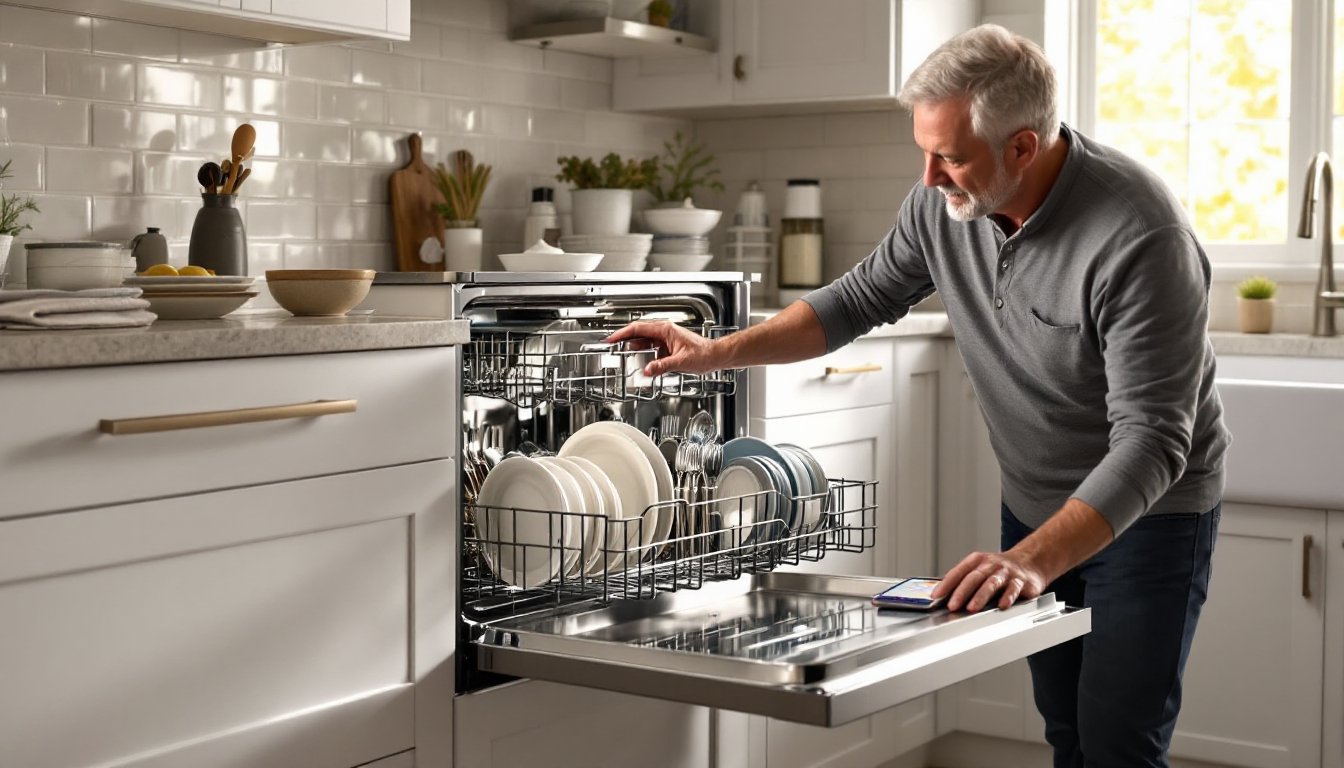
Rack configuration determines what actually fits. Look for a third rack up top for utensils and small items, it frees up the lower racks for plates and bowls. Adjustable tines and fold-down sections let you fit awkward items like mixing bowls and baking sheets. Test the racks in-store by pulling them out: cheap models have flimsy glides that bind or derail.
Wash cycles range from basic (normal, heavy, rinse) to specialized options like sanitize, half-load, and bottle wash. The sanitize cycle heats water to 150°F or higher, which kills bacteria per NSF/ANSI Standard 184, useful if you’re washing baby bottles or cutting boards. Soil sensors adjust water and time automatically, which saves energy on lightly soiled loads.
Drying performance varies widely. According to independent appliance testing, heated dry cycles work better than condensation drying for plastics. Some models use a fan-assisted system or open the door slightly at the end of the cycle to vent steam. If you’re washing a lot of Tupperware, this matters.
Energy Star certification means the unit uses about 12% less energy and 30% less water than federal minimums. That translates to roughly $35 per year in utility savings, assuming you run it five times a week. Over a 10-year lifespan, that’s $350, enough to offset part of the upfront cost difference between standard and efficient models.
Hard water performance is critical if you’re dealing with mineral buildup. Some models include built-in water softeners or filtration systems. If you don’t have one, look for a model with a rinse aid dispenser and use it, it helps water sheet off dishes instead of beading up and leaving spots.
Top Dishwasher Brands Carried by Home Depot in 2026
Bosch dominates the mid-to-premium range with models between $700–$1,500. Their German-engineered units are known for quiet operation (many under 44 dB) and solid build quality. The 800 Series hits the sweet spot for features and price, with third racks, adjustable tines, and excellent drying performance. Bosch uses a condensation drying system, so plastics may stay damp unless you crack the door.
KitchenAid offers strong wash performance and durable stainless steel tubs. Their models run $800–$1,400 and include features like ProWash cycles that auto-adjust based on soil level. They’re louder than Bosch (typically 45–50 dB), but the wash results hold up well over time.
GE and GE Profile cover the budget-to-midrange spectrum ($500–$1,000). The Profile line includes bottle jets and deep-clean silverware jets, which are handy for narrow items. Their plastic tubs are fine for light use but don’t hold up as well as stainless if you’re running the dishwasher daily.
Whirlpool models land in the $600–$900 range and offer good value for families. The sensor cycle works well, and the soil sensors reliably adjust water usage. They’re dependable workhorses without flashy features, which is exactly what some kitchens need.
Samsung and LG bring tech-forward features like Wi-Fi connectivity and app controls, plus sleek exteriors. Prices range $700–$1,300. The smart features let you start cycles remotely or get maintenance alerts, though many users never bother with the app after setup. Both brands use stainless tubs and offer solid warranties.
Budgeting for Your Dishwasher: Price Ranges and Financing Options
Under $500: Expect basic built-ins with plastic tubs, limited cycles, and higher noise levels (50+ dB). Brands like Frigidaire and base-model GE fall here. These work fine for light use or rental properties, but don’t expect longevity beyond 5–7 years.
$500–$800: This range gets you stainless tubs, soil sensors, third racks, and quieter operation (45–48 dB). Whirlpool, Maytag, and mid-tier GE Profile models live here. It’s the value zone for most homeowners who want reliability without premium pricing.
$800–$1,200: Premium features kick in, ultra-quiet operation (under 44 dB), advanced drying systems, Wi-Fi connectivity, and specialized wash zones. Bosch 500 and 800 Series, KitchenAid, and higher-end Samsung/LG models occupy this bracket. According to cost estimator tools, this is where most kitchen remodels budget for appliances.
$1,200+: High-end models with custom panels, zone washing, and commercial-grade components. Bosch Benchmark and premium KitchenAid fall here. Unless you’re doing a full kitchen renovation with designer finishes, most homes don’t need this tier.
Installation costs add $150–$300 depending on existing hookups. If you need new electrical or plumbing run, add another $200–$500, that’s licensed work in most jurisdictions. Removing and disposing of an old unit costs $50–$75 if not included in the delivery package.
Home Depot’s financing options include 6-month interest-free through their consumer credit card (on purchases $299+) and longer-term financing through Citibank for larger buys. If you’re replacing multiple appliances, bundling can unlock better promotional rates. The project cost calculators help factor in total kitchen upgrade expenses if you’re planning a broader remodel.