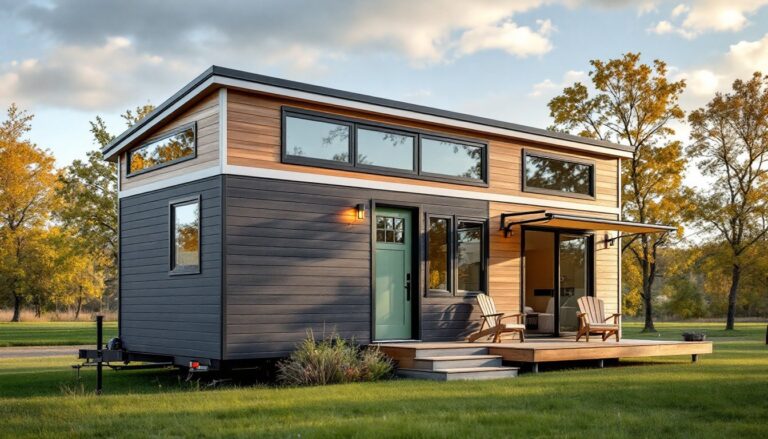
Alabama’s tiny home movement has evolved from a curiosity to a practical housing solution. With lower costs, reduced energy consumption, and placement flexibility, especially in rural areas, these compact dwellings attract retirees, young professionals, and anyone ready to downsize without sacrificing quality. Finding a builder who understands Alabama’s specific regulations, climate challenges, and regional preferences can make or break a project. This guide covers the state’s top builders, regulatory considerations, financing strategies, and the questions prospective buyers should ask before signing a contract.
Table of Contents
ToggleKey Takeaways
- Tiny home builders in Alabama offer a cost-effective housing solution, with quality builds ranging from $40,000 to $100,000 compared to the $220,000 average for traditional homes.
- Alabama’s lack of statewide zoning creates a patchwork of local regulations—verify with county planning departments whether your target area permits tiny homes, RVs on wheels, or ADUs before purchasing land.
- Traditional mortgages rarely apply to tiny homes; explore personal loans, RV loans, construction loans, or cash purchases, with monthly payments starting around $900 for a $60,000 loan.
- Leading tiny home builders like Alabama Tiny Homes (Cullman), New Frontier Tiny Homes, and Timbercraft specialize in IRC Appendix Q or RVIA-certified builds tailored to the state’s humid climate and soil conditions.
- Budget for hidden costs beyond the home price, including land ($10,000–$50,000), site prep ($3,000–$10,000), and utility hookups (septic, well, electric: $9,500–$25,000), plus verify local references and warranty policies before signing a contract.
Why Tiny Homes Are Gaining Popularity in Alabama
Alabama’s housing market, combined with a growing awareness of sustainable living, has created ideal conditions for tiny home adoption. The state offers affordable land, particularly in counties like Cullman, Madison, and Baldwin, where buyers can secure rural parcels for far less than suburban lots in Birmingham or Huntsville.
Lower upfront costs are a major draw. A quality tiny home typically ranges from $40,000 to $100,000, depending on square footage, finishes, and whether it’s a RVIA-certified trailer model or a foundation-built structure. Traditional single-family homes in Alabama average around $220,000 as of early 2026, making tiny homes an attractive alternative for first-time buyers or those seeking debt-free ownership.
Energy efficiency matters in a state where summers push HVAC systems hard. Tiny homes, often under 400 square feet, require minimal heating and cooling. Builders increasingly incorporate spray foam insulation, mini-split heat pumps, and energy-efficient building techniques to keep utility bills under $50 monthly.
The appeal also extends to lifestyle flexibility. Retirees downsize to simplify maintenance. Remote workers appreciate the ability to relocate without selling. Builders report increased inquiries from clients seeking accessory dwelling units (ADUs) on family land, a setup that sidesteps some zoning hurdles while providing multi-generational housing options.
Top Tiny Home Builders Operating in Alabama
Several builders serve Alabama, though not all maintain in-state facilities. Buyers should verify delivery logistics, warranty coverage, and whether a builder partners with local contractors for site prep and utility hookups.
New Frontier Tiny Homes (Huntsville-adjacent operations) specializes in RVIA-certified park models and custom trailers. Their builds typically range from 200 to 400 square feet, with steel-frame construction and LP SmartSide siding. They offer climate-appropriate upgrades like hurricane straps and vapor barriers for Gulf Coast placements.
Timbercraft Tiny Homes delivers throughout the Southeast, including Alabama. Known for high-end finishes, hardwood floors, quartz counters, custom cabinetry, they cater to buyers prioritizing aesthetics alongside function. Expect lead times of 6–8 months and budgets starting around $85,000.
Alabama Tiny Homes (Cullman) focuses on foundation-built models compliant with IRC Appendix Q, the residential code section governing tiny houses. This compliance helps buyers navigate permitting in counties requiring structures to meet conventional building standards. They handle excavation, pier-and-beam foundations, and utility rough-ins, which simplifies the process for buyers unfamiliar with site work.
Tiny House Building Company operates out of nearby Georgia but maintains a strong Alabama client base. They offer both DIY shell packages and turnkey builds, making them versatile for hands-on buyers wanting to finish interiors themselves.
When comparing builders, request references from Alabama-based clients. Climate, soil conditions, and local inspector familiarity with tiny home standards vary significantly from, say, Colorado or Oregon, where many national builders originate.
Custom vs. Pre-Designed Tiny Homes: What Alabama Builders Offer
Most Alabama builders provide both pathways, but understanding the trade-offs helps buyers allocate budgets effectively.
Pre-designed models streamline the process. Builders use proven floor plans optimized for efficient use of space, loft bedrooms, fold-down tables, under-stair storage. These plans have already cleared structural engineering reviews, shortening timelines and reducing design fees. Buyers choose finishes, appliances, and optional add-ons like solar panel rough-ins or composting toilets. Lead times run 3–5 months, and costs are more predictable.
Custom builds let clients dictate layout, ceiling height, window placement, and structural features. A buyer might request a ground-floor bedroom (eliminating loft ladders for aging-in-place), a larger kitchen for serious cooking, or reinforced roof framing for future solar arrays. Customization adds 15–30% to base costs and extends timelines to 6–10 months due to engineering revisions and permit approvals.
One consideration: RVIA certification (Recreational Vehicle Industry Association) applies only to trailer-mounted homes built to RV standards. These homes can park in RV parks and some private lands without traditional building permits, but they may not qualify for conventional mortgages. Foundation-built tiny homes, following IRC Appendix Q or local amendments, require permits but often appreciate like traditional real estate.
Alabama’s climate demands attention to insulation and moisture control. Custom builds should specify closed-cell spray foam (R-6 to R-7 per inch) in walls and ceilings, and ensure crawl space vapor barriers if using pier foundations. Gulf Coast builds benefit from impact-resistant windows rated for 130+ mph winds.
Understanding Alabama’s Tiny Home Zoning and Building Codes
Alabama has no statewide zoning law, so regulations fall to counties and municipalities. This creates a patchwork of rules, some permissive, others restrictive.
Unincorporated counties generally offer the most flexibility. Many have no minimum square footage requirements for residential structures, though all buildings must meet the Alabama Residential Code (based on IRC). This means electrical, plumbing, and structural work must pass inspection, but creative interpretations of “dwelling” sometimes accommodate tiny homes.
Incorporated cities often enforce minimum square footage (commonly 600–1,000 square feet) for primary residences, effectively banning standalone tiny homes. Buyers targeting urban areas should explore accessory dwelling unit (ADU) ordinances, which may permit a secondary structure on a lot with an existing main house. Birmingham, Mobile, and Huntsville have updated ADU codes in recent years, though restrictions on size, setbacks, and owner occupancy still apply.
RVIA-certified tiny homes on wheels occupy a gray area. They’re legally RVs, so placement depends on local RV ordinances. Some counties allow full-time RV living on private land: others limit it to 30–180 days annually. Always verify with the local planning department before purchasing land.
Septic and utilities also factor into compliance. Homes under 400 square feet may qualify for reduced septic system requirements, but county health departments must approve designs. Off-grid setups (composting toilets, rainwater catchment) face varying acceptance, rural counties may approve them, while suburban jurisdictions often mandate grid connections.
Permitting tiny homes as project planning guides suggest involves coordinating building, electrical, plumbing, and sometimes mechanical inspections. Budget $500–$2,000 for permit fees and inspections, depending on county.
Financing Your Tiny Home Project in Alabama
Traditional mortgages rarely cover tiny homes, especially RVIA-certified models classified as vehicles. Buyers must explore alternative financing.
Personal loans are the most common route. Credit unions and online lenders offer unsecured loans up to $100,000 with terms of 5–10 years. Interest rates as of 2026 range from 6% to 12%, depending on credit scores. Monthly payments on a $60,000 loan at 8% over seven years run about $900.
RV loans apply to RVIA-certified tiny homes. These secured loans use the home as collateral, often yielding lower rates (5%–8%) than personal loans. Terms extend to 15 years for higher loan amounts. Lenders require proof of RVIA certification and may inspect the unit.
Chattel loans cover manufactured housing not permanently affixed to land. If a tiny home meets HUD manufactured home standards (distinct from RVIA or IRC), this option becomes available. Rates are slightly higher than conventional mortgages but lower than personal loans.
Construction loans suit buyers purchasing land and hiring a builder for a foundation-based tiny home. These short-term loans (12–18 months) convert to mortgages upon completion. Alabama lenders increasingly recognize IRC Appendix Q compliance, improving approval odds.
Cash purchases remain popular. Many buyers sell existing homes, liquidate investments, or save aggressively to avoid interest costs altogether. Builders sometimes offer payment plans, requiring 30%–50% down and progress payments during construction.
Buyers should also budget for land costs ($10,000–$50,000 for rural parcels), site prep (clearing, grading, utility trenches: $3,000–$10,000), and utility hookups (well drilling: $5,000–$10,000: septic: $3,000–$7,000: electric service: $1,500–$5,000). Factor in property taxes, which are comparatively low in Alabama but still apply.
Questions to Ask Before Hiring a Tiny Home Builder
Vetting builders thoroughly prevents costly mistakes. Request detailed answers to these questions:
-
Are you licensed and insured in Alabama? Verify contractor licenses through the Alabama Licensing Board for General Contractors (if foundation work is included). Request proof of liability and workers’ compensation insurance.
-
Do your builds meet IRC Appendix Q or RVIA standards? Clarify which code path applies. RVIA certification suits mobile setups: IRC Appendix Q applies to foundation builds intended as permanent residences.
-
What’s included in the base price? Itemize appliances, finishes, HVAC, electrical fixtures, and plumbing. Builders often quote shell prices, excluding hookups, delivery, or upgrades.
-
Who handles permits and inspections? Some builders manage this: others leave it to the buyer. Navigating Alabama county offices without construction experience can be frustrating.
-
What’s your warranty policy? Standard warranties cover structural defects for one year, with extended coverage for roofing or mechanical systems. Get it in writing.
-
Can you provide local references? Speaking with Alabama clients reveals how builders handle regional challenges, humidity, soil movement, wind loads.
-
What’s the payment schedule? Typical structures: 10% deposit, 40% at framing, 40% at substantial completion, 10% after final walkthrough. Avoid builders demanding full payment upfront.
-
How do you handle change orders? Understand costs and timeline impacts before requesting modifications mid-build.
-
Do you coordinate delivery and setup? Trailer-based homes require transport permits and escorts for wide loads. Foundation builds need crane or forklift access for modular sections.
-
What ongoing maintenance is required? Tiny homes demand different care than traditional houses, trailer axle greasing, LP siding caulking, and managing condensation in tight spaces.
Request a written contract covering scope, timeline, payment terms, and dispute resolution. Alabama follows standard contract law, but clear documentation prevents misunderstandings.
Conclusion
Alabama’s combination of affordable land, flexible rural zoning, and a growing pool of experienced builders makes it a viable state for tiny home ownership. Success hinges on understanding local regulations, choosing builders with regional expertise, and securing appropriate financing. Buyers who research thoroughly, ask pointed questions, and budget for the full project, including land, utilities, and permits, position themselves to enjoy the benefits of simplified, cost-effective living without the headaches of code violations or structural failures. Start by contacting county planning offices and touring completed builds in your target area.