Building or buying a tiny home without a functional bathroom is like owning a car without an engine, it’ll get you only so far. A bathroom is non-negotiable for off-grid living, full-time residence, or even legal compliance in many jurisdictions. But cramming a toilet, sink, and shower into 100–400 square feet requires thoughtful design, code-compliant plumbing, and realistic expectations about what you can DIY versus when to call a licensed plumber. This guide walks through bathroom types, space-saving layouts, utility hookups, and permitting realities so builders can plan a tiny home bathroom that works.
Table of Contents
ToggleKey Takeaways
- A functional bathroom is legally required for full-time tiny home residency in most jurisdictions and essential for meeting habitability codes like the International Residential Code (IRC) Appendix Q.
- Wet baths save space (15–20 square feet) with shared waterproofing, while separated bathrooms offer better comfort and require 25–35 square feet, making wet baths ideal for homes under 150 square feet.
- Space-saving solutions like wall-mounted fixtures, pocket doors, corner sinks, and recessed storage maximize usable floor area without sacrificing functionality in a tiny home with bathroom installations.
- Composting toilets ($900–$1,200) eliminate plumbing for off-grid builds but require regular maintenance; standard flush toilets connected to septic or sewer remain more practical and resale-friendly for stationary tiny homes.
- Proper plumbing and ventilation—including 3-inch toilet drains, 1½–2-inch vent pipes, and mechanical exhaust fans rated for 50 CFM—prevent mold, sewer gas, and costly water damage in compact bathrooms.
- Building permits, inspections, and code compliance through licensed plumbers are non-negotiable; zoning restrictions may further limit where tiny homes can be legally occupied, requiring research into local ordinances before construction.
Why a Bathroom Makes or Breaks Your Tiny Home
A tiny home without a bathroom isn’t just inconvenient, it’s often illegal to live in full-time. Most municipalities classify dwellings without dedicated toilet and bathing facilities as recreational vehicles or temporary structures, which limits where they can be parked and whether occupancy permits will be issued.
Health and safety codes under the International Residential Code (IRC) Appendix Q require permanent tiny homes to include a water closet (toilet), lavatory (sink), and bathing fixture. Even if a builder plans to live off-grid, resale value tanks without a proper bathroom. Future buyers or lenders won’t finance a structure that can’t meet minimum habitability standards.
Beyond legality, daily function suffers. Composting toilets and outdoor showers work for weekend camping, but full-time residents need weather-protected facilities with proper drainage and ventilation. A poorly planned bathroom, undersized, inadequately vented, or reliant on sketchy DIY plumbing, creates mold, odor, and structural damage that costs more to fix than building it right the first time.
The bathroom also sets the tone for livability. A cramped, poorly lit space with a leaky cassette toilet will make even a beautifully finished main room feel uncomfortable. Invest the square footage and budget here: it’s the difference between a tiny home and a glorified shed.
Types of Bathrooms for Tiny Homes
Wet Baths vs. Separated Bathrooms
A wet bath consolidates the entire bathroom into a single waterproof enclosure, toilet, sink, and showerhead all share the same floor, with a central drain. Common in RVs and marine applications, wet baths maximize space efficiency and simplify waterproofing. The entire room becomes the shower stall.
Pros: Minimal square footage (as small as 15–20 square feet), straightforward framing, and fewer fixtures to plumb. One vapor barrier and floor drain handle all water.
Cons: Everything gets wet during showers. Toilet paper, towels, and any storage need waterproof enclosures. Ventilation becomes critical to prevent mold on walls and ceiling. Not everyone adapts to the lack of separation.
A separated bathroom divides the toilet and shower with a partial wall, curtain, or dedicated shower pan and surround. This layout requires 25–35 square feet minimum but keeps fixtures dry and feels more like a traditional bathroom.
Pros: Better user experience, especially for two-person households. Easier to keep toilet and sink areas dry. Standard fiberglass or tile shower pans work without custom waterproofing the entire room.
Cons: Needs more space, more framing, and separate drainage for the shower. Costs rise with additional materials and labor.
For tiny homes under 150 square feet, wet baths make sense. Above that, a separated layout improves daily comfort without sacrificing too much floor area.
Composting Toilets and Alternative Plumbing Solutions
Composting toilets eliminate the need for a black water tank or sewer connection. Models like Nature’s Head or Sun-Mar use a fan to aerate waste, separating liquids into a bottle and solids into a compost chamber with peat moss or coconut coir. After several weeks, the solids break down into odorless compost.
Pros: No plumbing required beyond a small vent pipe through the wall or roof. Ideal for off-grid builds or mobile tiny homes. Low water usage.
Cons: Requires regular emptying (every 2–4 weeks for two people). Urine bottles need daily or every-other-day disposal. Initial cost runs $900–$1,200. Not legal in all jurisdictions, some counties require connection to approved septic or sewer.
Cassette toilets (common in RVs) store waste in a removable tank that’s dumped at an RV dump station. Simpler than composting but requires access to disposal facilities.
Incinerating toilets burn waste to ash using propane or electricity. No water, no tanks, but expensive ($1,500–$4,000) and require significant power or fuel.
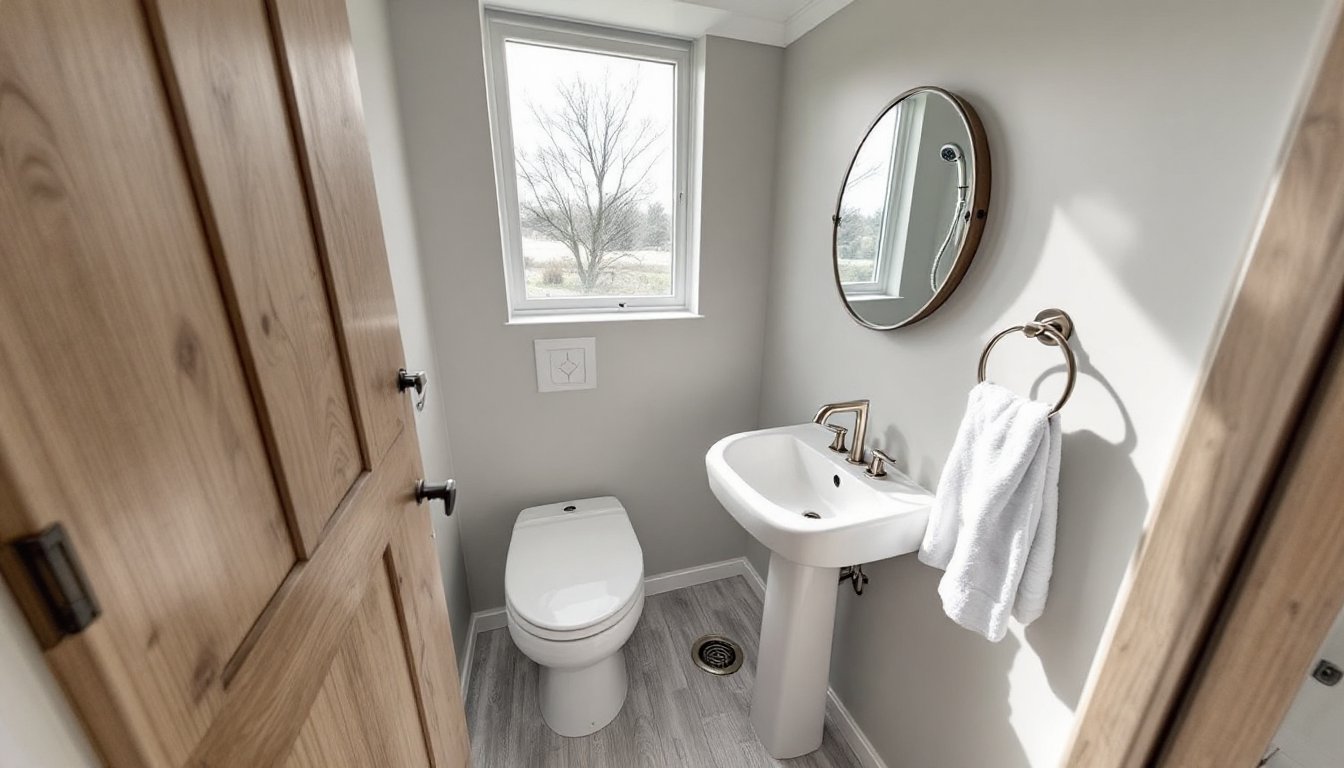
For stationary tiny homes on foundations, a standard flush toilet connected to septic or municipal sewer remains the most practical and resale-friendly option. Off-grid or mobile builds benefit more from composting systems, but builders should confirm local health department approval before installation. Many tiny home bathroom layouts showcase creative plumbing solutions that balance code compliance with space efficiency.
Space-Saving Design Ideas for Tiny Home Bathrooms
Corner sinks and wall-mounted fixtures free up floor space and make tiny bathrooms feel less cramped. A corner pedestal sink occupies roughly 12 inches of width versus 18–24 inches for a standard vanity. Wall-hung toilets mount to a concealed carrier inside the wall, eliminating the base footprint and simplifying floor cleaning.
Pocket doors or barn doors save the 24–30 inches of swing clearance a standard hinged door requires. A pocket door slides into the wall cavity, framers need to plan the rough opening with a steel pocket door frame kit during stud installation. Barn doors slide along an exterior track and add a design element, but they don’t seal as tightly for sound or moisture.
Stackable or combo units: Some tiny builders install a shower-toilet combo where the shower pan surrounds a centrally located toilet. Folding or sliding shower doors contain spray. Others use a shower-tub combo with a 32-inch neo-angle base or a Japanese soaking tub that’s deeper but shorter in length.
Overhead and recessed storage keeps essentials accessible without eating counter space. Recessed medicine cabinets (installed between studs) and floating shelves above the toilet or beside the shower provide toiletries storage. Avoid freestanding carts or floor baskets, they make small bathrooms feel cluttered and trap moisture.
Tankless water heaters mounted under the sink or in an adjacent utility closet eliminate the need for a 20–40 gallon tank. Point-of-use electric models (EcoSmart, Rheem) deliver instant hot water for a single fixture, though whole-home tankless units (Rinnai, Navien) require adequate gas lines and venting.
Lighting and mirrors: A large mirror on one wall reflects light and visually doubles the space. LED recessed cans or sconces rated for damp/wet locations provide task lighting without protruding fixtures. Avoid pendant lights in tight bathrooms, they’ll get bumped.
Material choices matter. Luxury vinyl plank (LVP) or sheet vinyl flooring resists water better than laminate and installs over a variety of subfloors. Fiberglass shower surrounds weigh less and install faster than tile but require solid blocking behind the panels for grab bars. For wet baths, marine-grade vinyl or rubberized deck coatings prevent slips.
Plumbing and Utility Considerations
Water supply lines in tiny homes typically use PEX tubing (cross-linked polyethylene) instead of copper or CPVC. PEX is flexible, freeze-resistant, and easier to route through tight spaces. Use ½-inch lines for fixtures, ¾-inch for the main supply. Crimped or push-fit (SharkBite) connections work, but crimped fittings are more reliable for mobile builds subject to road vibration.
Bathroom fixtures share a wet wall, a 2×6 stud wall that houses supply lines, drain pipes, and vents. In a tiny home, this wall often runs along one side, with the toilet, sink, and shower fixtures arranged in a line to minimize plumbing runs. Framing a wet wall with 2×6 lumber instead of 2×4 provides clearance for a 3-inch or 4-inch toilet drain and vent stack.
Drain, waste, and vent (DWV) sizing follows the International Plumbing Code (IPC) or Uniform Plumbing Code (UPC):
- Toilet drain: 3-inch minimum (4-inch preferred for fewer clogs)
- Shower drain: 2-inch minimum
- Sink drain: 1½-inch minimum
- Vent pipes: Typically 1½-inch or 2-inch, terminating above the roofline
Venting prevents trap siphoning and sewer gases from entering the living space. An air admittance valve (AAV) can replace a traditional vent pipe in some jurisdictions, but not all building departments allow them. Check local code before relying on AAVs.
Gray water and black water tanks are necessary for mobile tiny homes not connected to sewer or septic. Gray water (from sinks and showers) drains to one tank: black water (toilet waste) goes to another. Tanks mount under the floor or in a tongue storage box on a trailer. Capacity varies, most builders plan for 20–40 gallons of gray water and 10–20 gallons of black water. Dumping frequency depends on occupancy and water use.
For stationary tiny homes, connecting to municipal sewer or an on-site septic system is simpler long-term. Septic systems require a percolation test and permitting through the local health department. Some jurisdictions allow smaller, alternative septic designs (like aerobic treatment units) for tiny homes under 400 square feet.
Water pressure and pump systems: Off-grid tiny homes with rainwater catchment or well water need a 12V or 120V demand pump to pressurize the system. Accumulator tanks smooth out pressure spikes. City water connections use standard hose bibs or permanent underground lines with frost-proof hydrants in cold climates.
Building Codes and Legal Requirements for Tiny Home Bathrooms
Appendix Q of the IRC outlines minimum standards for tiny homes on foundations (400 square feet or less). Key bathroom requirements include:
- At least one water closet, lavatory, and bathing fixture
- Minimum ceiling height of 6 feet 8 inches in bathrooms (except under sloped ceilings or lofts, where 6 feet 4 inches is allowed over the fixture)
- Toilets require 15 inches of clearance from the centerline to any wall or fixture on either side, and 21 inches of clearance in front
- Showers must have at least 30 inches × 30 inches of interior space
Ventilation: Bathrooms without operable windows need a mechanical exhaust fan rated for 50 CFM minimum, vented to the exterior (not into an attic or crawl space). Fans should run continuously or be wired to the light switch. For wet baths and high-moisture environments, a humidity-sensing fan (like Panasonic WhisperSense) prevents mold.
Electrical requirements under the National Electrical Code (NEC) include:
- All receptacles within 6 feet of a water source (sink, shower) must be GFCI-protected
- At least one 20-amp circuit for bathroom receptacles (can be shared with other bathrooms, but not other rooms)
- Light fixtures and exhaust fans in shower/tub areas must be rated for wet or damp locations
Mobile vs. stationary distinctions: Tiny homes on wheels often fall under RV or park model standards (NFPA 1192, ANSI A119.5) rather than the IRC. RV codes are less stringent, composting toilets, wet baths, and smaller fixtures are acceptable, but limit where the home can be parked and occupied long-term. Stationary tiny homes on permanent foundations must meet full IRC and local amendments, including septic or sewer connections.
Permits and inspections: Most jurisdictions require plumbing permits for new bathroom installations, including rough-in inspections before walls are closed and final inspections after fixtures are set. Hiring a licensed plumber for at least the rough-in phase ensures code compliance and avoids costly rework. Some builders DIY the fixture installation after the rough-in passes inspection, but drain and vent layout should always be reviewed by a professional.
Zoning and parking: Even with a code-compliant bathroom, tiny homes face zoning restrictions. Many municipalities prohibit permanent occupancy of structures on wheels. Others allow tiny homes as accessory dwelling units (ADUs) on existing residential lots, provided they meet setback, utility, and parking requirements. Research local zoning ordinances and consider working with a tiny-home-friendly builder or consultant if navigating permitting feels overwhelming.